67,000 building firms closed in a year: what Australia's builder shortage means for UK tradespeople
News · 2026-09-02 · 4 min read
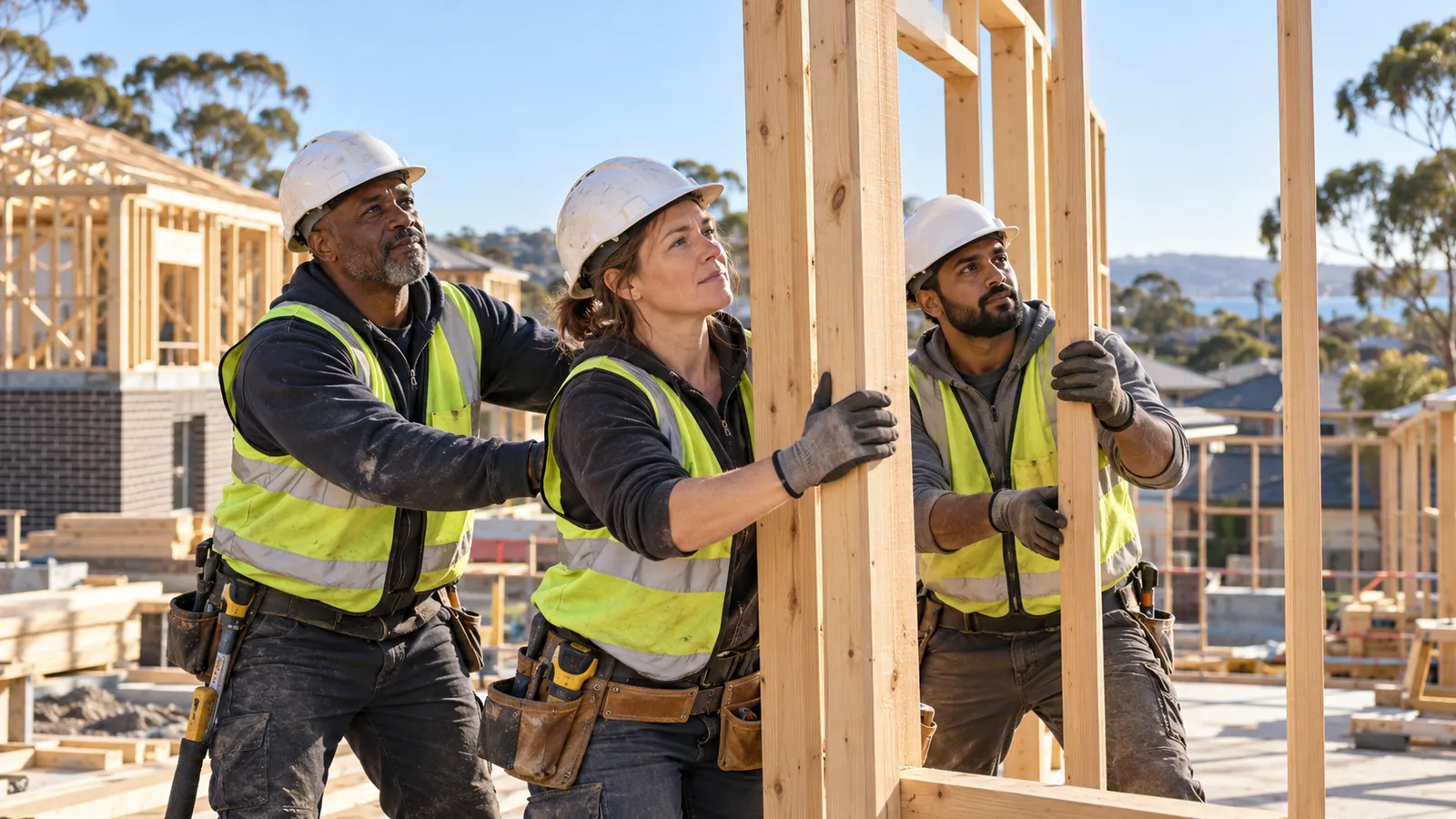
If you are a carpenter, electrician or site supervisor in the UK wondering whether Australia really needs you, the latest figures from its building industry give a fairly clear answer. The country is not short of building work. It is short of the people and the firms to get that work finished.
Firms are closing faster than they can be replaced
More than 67,000 construction businesses in Australia shut down last year. That was the fourth year in a row above 64,000. Close to half of new construction businesses do not make it past their third year, a survival rate not seen since the early 2010s.
That has knock-on effects. A large apartment project can take several years, so it often outlives the very firm hired to build it. Buyers, developers and subcontractors end up relying on companies that have roughly even odds of still trading when the job ends.
Confidence has slipped too. Sentiment in the industry dropped sharply between 2025 and 2026, with rising costs, labour shortages and finance pressures the biggest worries among decision-makers.
Record building work, not enough hands
Here is the odd part. The number of dwellings under construction reached 244,000 in the March 2026 quarter, the highest since records began in 1984. Demand and approvals are not what is holding things back. Capacity is: enough workers, enough firms and enough continuity to finish what has already been started.
The national housing target is slipping
The National Housing Accord aims for 1.2 million new homes by 2029. Official projections now put a realistic finish at December 2030 across the country, and as late as March 2032 in NSW. If closures carry on at the current rate, tens of thousands of firms that opened in the past year could be gone before the target date, along with their crews, contracts and warranties. NSW has already seen more than 3,000 construction firms close in just two years.
Where overseas trades come in
An industry that loses tens of thousands of firms a year is not short of projects. It needs skilled people and stable businesses to deliver them. Tradespeople, project managers and construction business owners from overseas are exactly the kind of capacity the housing pipeline is missing.
Policy is already a sore point. Roughly half of construction decision-makers name government settings among the main things likely to hurt the sector over the next five years. Making skilled migration simpler for construction occupations such as carpenters, electricians, site supervisors and civil engineers is one of the more direct options available to a government that wants to meet its housing goals without waiting years for local training to catch up. That is an argument being made, not a policy that has been announced, so treat it as a direction of travel rather than a promise.
What a UK tradesperson can do now
Visa routes tied to in-demand trades and construction management are likely to stay a priority as the shortage bites, particularly in NSW. If you are thinking of making the move, it helps to get the groundwork done early:
- Your qualifications. An NVQ, SVQ, City & Guilds award or a completed apprenticeship is a good start, but trades are usually assessed again in Australia, for example through Trades Recognition Australia. Some trades, such as electrical and plumbing work, also need a state licence.
- Your paperwork. UK documents are already in English, so translation is rarely an issue, though you may need certified copies. If a police certificate is asked for, it comes from ACRO Criminal Records Office.
- English. For many Australian work visas a current UK passport counts as meeting the English language requirement; check your visa's own page in the Home Affairs visa list. Employers and licensing bodies can still set their own rules.
- Your CV. List your tickets, the types of project you have worked on and any supervisory experience. Build AI CV can help you lay that out for Australian employers.
The short version
Australia has the ambition and the approvals to build. What it lacks is builders who stay in business long enough to deliver. Skilled migration may be one of the quickest ways through that gap, and you can see which construction and trade jobs in Australia for UK citizens are open right now.
#construction #australia #skilled migration #trades #housing #move to australia
 Unemployment up, builders still short: what Australia's 1.2 million homes target means for UK tradespeople
 Bricklayer or site engineer eyeing Australia? Why how a project is run may matter as much as the job offer
 Australia's parties are racing to cap migration, yet all want to keep skilled workers: what that means for UK applicants