Fancy a harvest season in Australia? Why fewer extension places could change the farm trail
News · 2026-09-25 · 3 min read
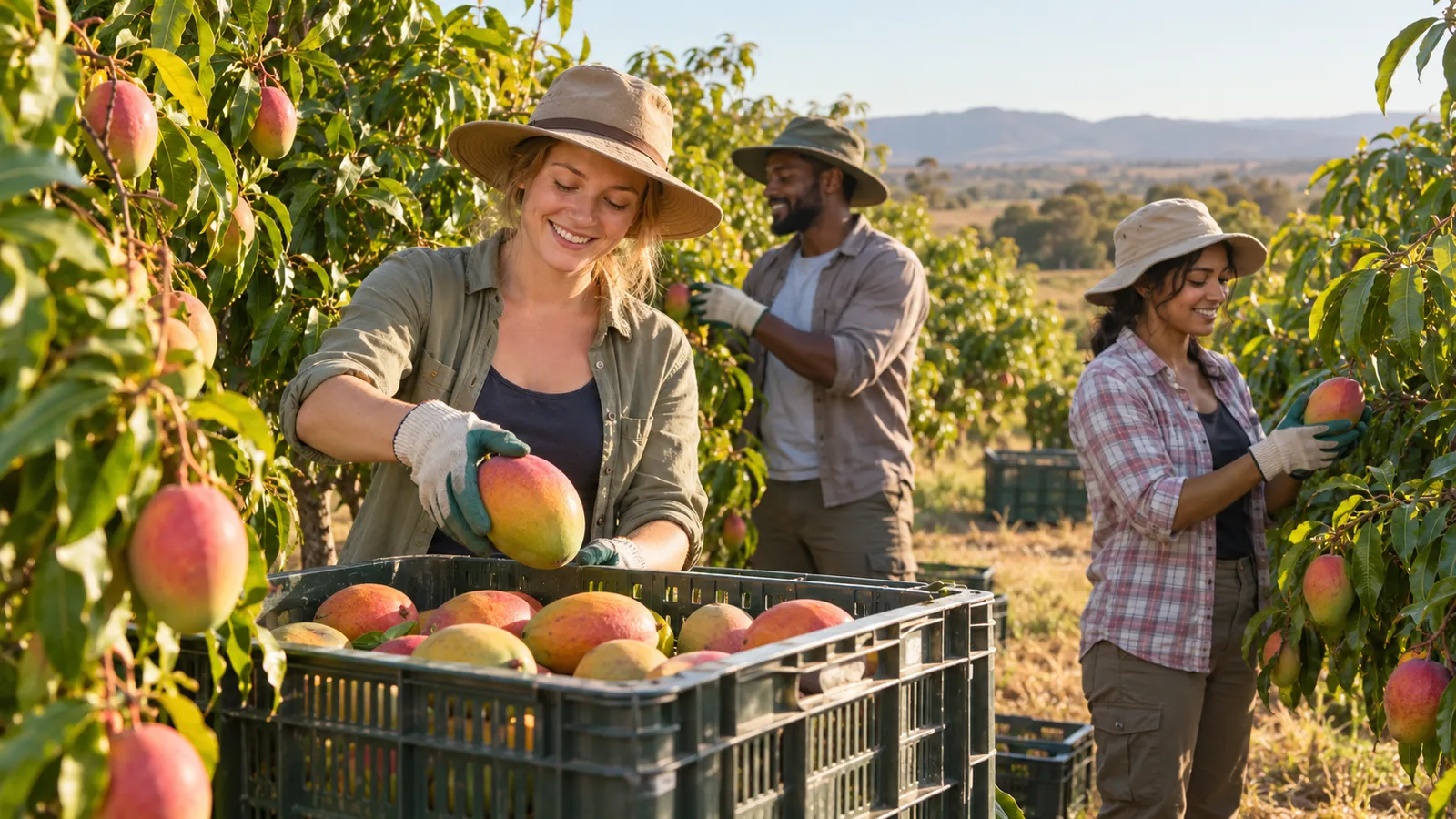
Picking mangoes or berries in the sunshine while it is cold and dark back home has long appealed to young people from the UK. Australia's farms have relied on that interest too. Now big changes to the Working Holiday Maker programme, announced just as the Christmas harvest approaches, are making growers nervous and leaving would-be backpackers with more to think about.
Earned extensions become a draw
Until now, finishing 88 days of regional or remote work was enough to qualify for a second-year visa. That certainty is going. Under the new system, second-year visas will be handed out by ballot, and the number of places falls from 57,000 to 45,000. Third-year visas face a much tighter squeeze, from 31,000 places to just 5,000.
Growers who planned harvests around a steady stream of returning workers lose that predictability. Industry groups warn that some backpackers could choose countries where the visa feels more secure.
A quick word for UK readers: the regional work conditions are not the same for every passport, so read the rules that apply to yours on the official visa listing before you plan around them.
Small family farms take the biggest hit
Not every grower feels this equally. Researchers who study seasonal work in Queensland point out that large farms tend to staff up through the Pacific Australia Labour Mobility (PALM) scheme, a separate and more structured programme. It is the smaller, family-run farms, without year-round work to offer, that have historically leaned on backpackers to fill seasonal gaps.
PALM is not a straight swap. Its workers are usually tied to longer, more structured placements. The value of working holiday makers has always been their mobility: they will follow a harvest from one region to the next over just a few weeks.
Slower visas on top
The overhaul lands on an existing bottleneck. Before the announcement, applications from 24 of 29 eligible countries had already been paused, and processing had stretched from a matter of days to roughly three months. With citrus and berry harvests opening within weeks in some regions, that delay alone could leave growers short of hands, whatever the ballot brings.
A brighter note for farm skills
One change has been welcomed with cautious hope: agriculture is being added to Australia's skilled worker visa list. Industry bodies want detail, especially on whether horticulture roles will be covered and what qualification levels might apply. Until that arrives, employers cannot plan around it with confidence.
How to approach the season from the UK
If you are planning a working holiday, the lesson is clear. A second or third year is no longer close to a sure thing, and in a ballot system, regional work done early and well documented matters more than ever. Keep payslips and records of every day you work.
For growers, spreading recruitment is now urgent rather than optional:
- exploring PALM scheme arrangements
- following the skilled visa detail as it comes out
- allowing longer lead times for visa processing
If you want to line up seasonal work, Seasonal Jobs Australia has harvest and farm roles. For more on the ballot itself, read what the backpacker visa ballot means for you and our look at the farm visa fix for harvest season. Thinking longer term? See current jobs in Australia.
#farm work #working holiday #australia #harvest #palm scheme #backpackers
 Got a farm job offer in Australia? A new fast-track lane may speed up your harvest visa
 Planning a working holiday in Australia from the UK? A ballot may now decide your second year
 Planning a working holiday in Australia? What a silent pause for twenty-four countries tells UK travellers