60 jobs, one local applicant: what WA's meat industry visa delays mean for overseas workers
News · 2026-09-07 · 4 min read
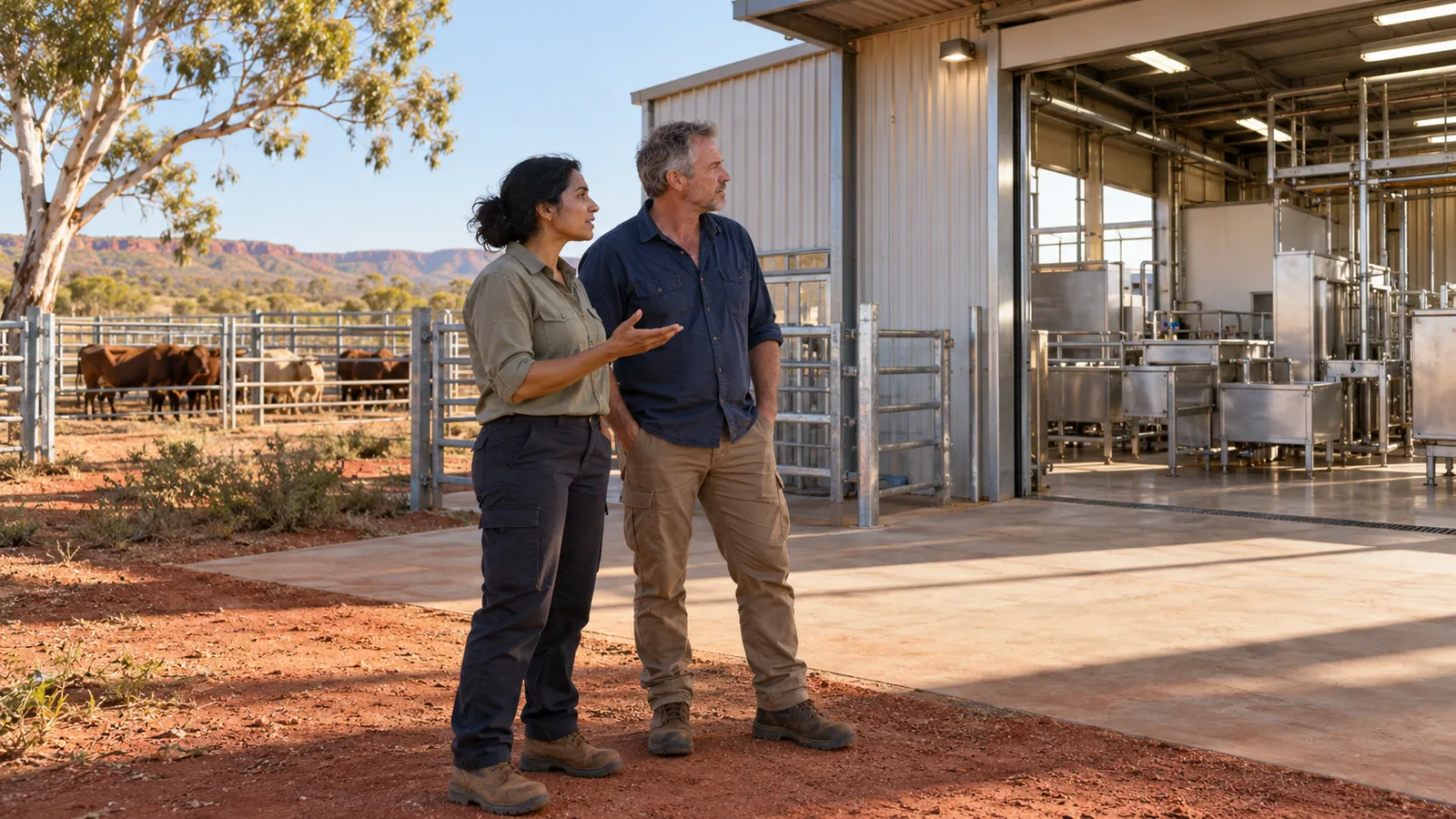
When you apply for an Australian work visa from the UK, you probably assume your file joins one queue and moves forward in order. Since July, that is not quite how it works. The way Australia now ranks visa applications has left some regional employers in Western Australia with workers recruited, fees paid and no idea when anyone will arrive.
How the five tiers work
In July, the Department of Home Affairs brought in a five-tier system for prioritising visa applications. Offshore applicants in industries other than law enforcement, defence, construction, healthcare and teaching sit in the lowest tier. Meat processing is not on the priority list, and neither is pork production.
The aim, keeping Australian jobs for Australian workers, is a reasonable one in principle. The trouble starts in places where local workers are simply not available.
When the local labour pool is close to empty
In the Kimberley, a far-north region of the state, an abattoir advertised 60 skilled positions and received exactly one application from an Australian resident. That applicant turned out not to have the skills required.
This is not about employers wanting cheaper labour from abroad. It is about distance. Remote operations cannot attract enough local interest whatever they pay, because very few skilled meatworkers are willing to move to the far north of WA.
What the wait is costing
Two employers show the scale of the problem.
A reopening abattoir in the Kimberley. Around 30 skilled workers, plus 13 partners, were lined up to staff a meatworks being brought back into use. About $390,000 in visa fees has already been paid. The opening, first planned for this year, has slipped to a soft launch in February and a full commercial start in April, while thousands of cattle still need somewhere to go.
A piggery in the south of the state. Roughly 90 per cent of its workforce comes from overseas. It is growing from 1,500 to 2,500 sows, with piglets due in six months. Many of its incoming workers were recruited in January, some have already left their previous jobs, and there is no certainty their visas will be processed in time.
Three clocks running out of step
Both cases show a gap between three timelines that are supposed to line up: when an employer recruits, how long the visa takes, and the needs of a business that cannot stop and wait. A piggery keeps breeding. Cattle cannot be held forever while an abattoir waits to open.
Employers using the Meat Industry Labour Agreement stream have been told applications are still being processed in line with programme requirements and existing processing arrangements. That is little help when there is no sign of timing and no one to ring for an update.
What UK workers considering regional work should know
If you are a butcher or meat worker in the UK, or simply open to a regional job, the lesson is about planning rather than giving up:
- Ask a prospective employer which visa or labour agreement they are using, and whether the industry is on the priority list.
- Do not hand in your notice in the UK until your visa has been granted. Some workers in these cases resigned early and are now waiting.
- Have your documents ready so nothing on your side slows the file down. If a UK police certificate is requested, it comes from ACRO Criminal Records Office, and your UK paperwork is already in English, though certified copies may be needed.
- Keep an eye on the Department of Home Affairs website for changes to processing priorities.
Where this could go next
Priority systems built to protect the national labour market do not automatically allow for regions and industries with no realistic local workforce. Until that is tackled, whether through exemptions, quicker processing for labour agreements or clearer updates from the Department, more remote employers are likely to find themselves in the same position: workers found, fees paid and work on hold. You can browse current jobs in Australia for UK citizens, including roles outside the big cities.
#visa processing #western australia #meat industry #labour agreements #regional jobs #skilled visas
 Waiting on an Australian visa from the UK? Why employers say speed matters more than numbers
 UK nurse or teacher applying for Australia from home? Why your visa could now take up to 12 months
 Applying for an Australian skilled visa from the UK? Where you now sit in the processing queue