UK welders and fabricators: why Australia says 89.2 per cent of firms see a skills gap
Tips · 2026-09-30 · 4 min read
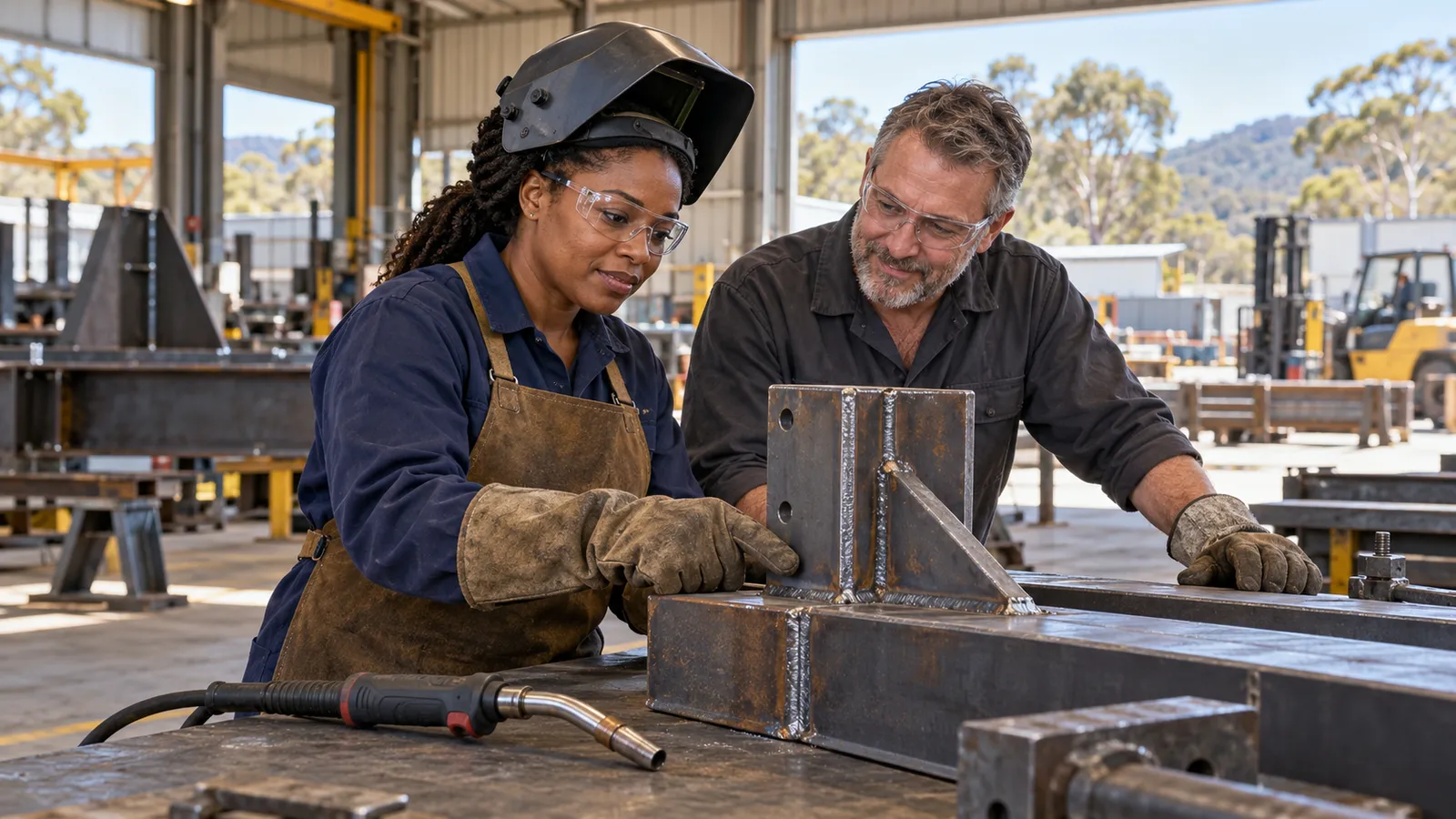
Australia has a long list of defence, infrastructure and renewable energy projects on the way, and it may struggle to find enough skilled people to build them. If you weld, fabricate or work as a boilermaker in the UK, that shortfall is worth a proper look.
Plenty of workshops, not enough welders
The welding industry's national body surveyed businesses for its 2026 Industry and Workforce Outlook, and the results point two ways at once. Many firms are anxious about where their next contract will come from. Yet 89.2 per cent said Australia does not have enough qualified welders for the infrastructure and defence work ahead.
That is less contradictory than it sounds. The survey describes a mismatch, not a lack of long-term need:
- six in ten respondents had three months or less of confirmed work
- one in five had no confirmed pipeline at all
- almost 60 per cent of fabrication workshops were running below 75 per cent capacity
Firms gave both a shortage of work and a shortage of skilled staff as reasons. The industry's view is that local businesses have the capability but not enough access to projects, so it is pressing for stronger local content rules in government buying.
Why standards keep coming up
The industry wants governments to strengthen local content requirements in public projects, bring in independent checks of fabricated steel wherever it is made, support a proposed Australian Fabrication Authority, help smaller firms adopt advanced manufacturing technology, and judge contracts on whole-of-life value rather than the lowest upfront price.
Compliance sits at the heart of this. About 71.4 per cent of respondents said imported fabricated products at least sometimes fail to meet Australian standards, and 53.6 per cent said that happens often or very often. For a worker, the message is simple: employers care a great deal about people who can prove they work to Australian standards.
Squeezed margins, steady investment
Costs are biting. Some 82.1 per cent reported higher energy prices and 78.5 per cent higher material costs, but only 28.5 per cent raised their prices, and nearly 40 per cent saw gross margins fall. Even so, half of respondents spent more on technology, 42.8 per cent on staff training and 39.2 per cent on research and development. Firms putting money into their people and kit are often the ones worth joining.
Turning this into a plan from the UK
Think long term. Defence, infrastructure and renewable projects take years, and the survey suggests qualified people are the bottleneck.
Make your tickets count. Your City and Guilds certificates, NVQ or completed apprenticeship are a strong start, but trades are usually assessed again in Australia, for example through Trades Recognition Australia. Keep records of the welding processes, positions and codes you have worked to, and get your coded welding history on paper. When you put it on your CV, Build AI CV can help you set out tickets and processes clearly.
Expect more training on offer. The industry wants more apprenticeships, pre-apprenticeship programmes, TAFE courses and industry-led training. Some experienced migrants may find extra training useful for a skills assessment or licensing.
Watch the status of the trade. About 79.5 per cent of respondents felt welding does not get the respect it deserves. Efforts to raise its profile could improve pay and conditions over time.
Check before you book flights
Visa rules and occupation lists change often, and a shortage in one industry does not mean you will be eligible for a visa. Check the current Skills in Demand visa settings, occupation lists and skills assessment requirements for your trade on the Department of Home Affairs visa listing, or get qualified migration advice about your own situation.
One to watch
Australia's fabrication sector has spare capacity but not enough qualified people or secured projects to fill it. If local content rules tighten and pipelines grow, demand for skilled, standards-minded welders could rise.
For related reading, see why skilled trades are a strong migration route and Australia's need for nearly a million tradies, then browse welding and trade jobs.
#welding jobs #australia #fabrication #trades #boilermakers #move to australia from the uk
 No degree, no problem? Why UK tradespeople could have the stronger case for Australia
 Working holiday ballots and a points boost for trades: what Australia's migration reset means for people in the UK
 Australia's migration row and the shortage behind it: what people in the UK planning a move should know