Laying bricks in the UK? Canberra has only seven apprentices in training, and that could matter to you
News · 2026-08-24 · 4 min read
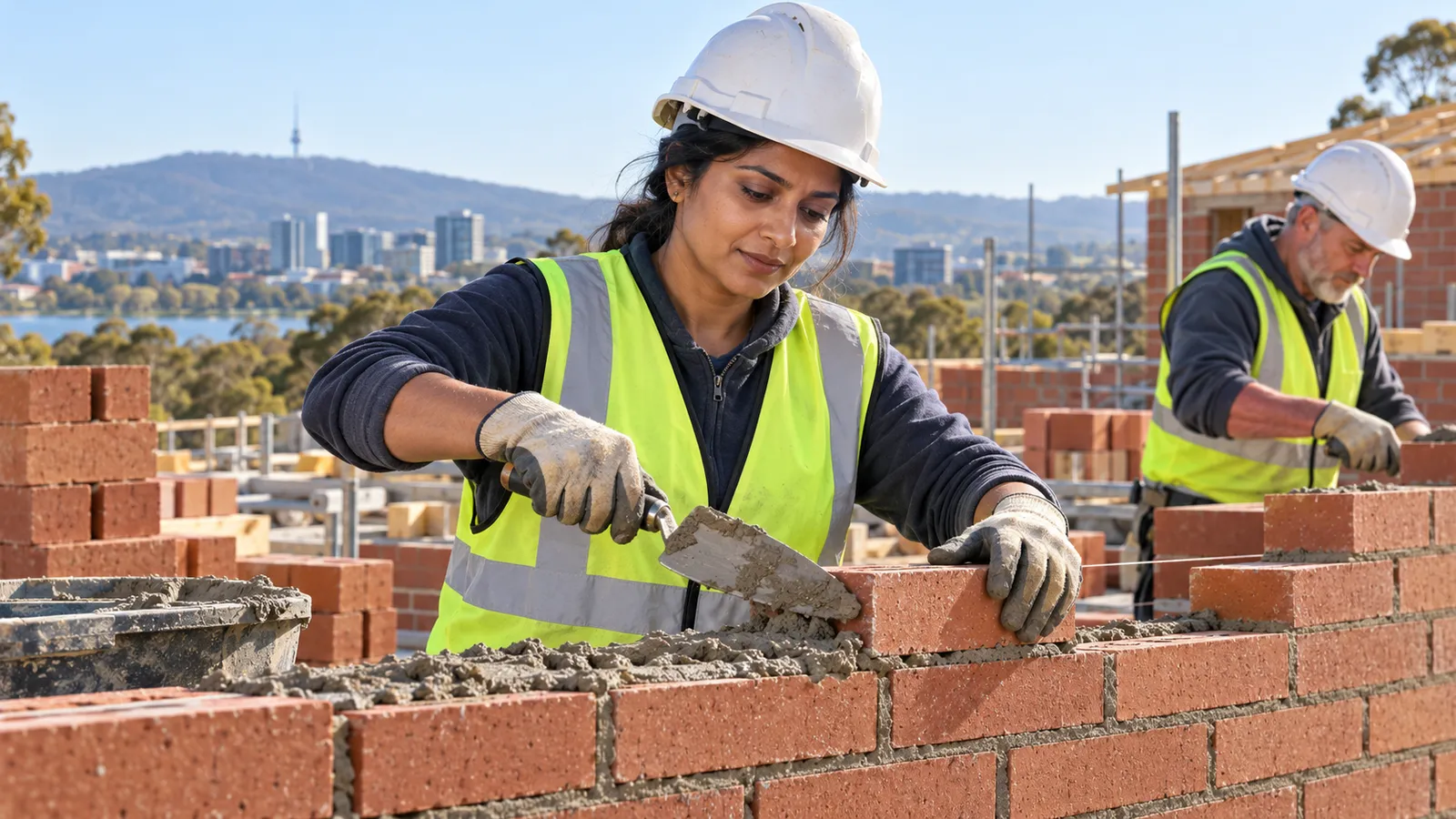
If you have spent years on UK building sites with a trowel in your hand, here is a figure worth knowing. Across the whole ACT region, only seven people are currently training to become bricklayers. That is the pipeline meant to supply Canberra, a city that keeps on building upwards.
Below we look at why the gap has opened, why it is unlikely to close quickly and what a qualified bricklayer in the UK should weigh up before taking Canberra seriously.
A city growing faster than its trade
Over the same stretch in which Canberra's construction workforce grew by 10 per cent, apprentice numbers dropped by 20 per cent. Commercial and infrastructure work, including the extension of the territory's light rail, is keeping demand for labour high. House building, though, is soft at the moment, and that matters more than it sounds: most bricklaying apprentices learn the trade on homes. With fewer houses going up, fewer firms feel able to take on a learner for a four-year apprenticeship.
There is a target sitting on top of all this. The ACT government has committed to delivering 30,000 new homes by 2030. Seven trainees will not get anywhere near that.
Three reasons the gap is stubborn
- Starting is easier than finishing. Far more apprentices begin than complete. The work is physically hard, and many trainees spend too long labouring instead of building their trowel skills, so they drop out before they are much use on site.
- The experienced crews are getting older. On plenty of Canberra sites, bricklayers over 40 are the norm. When they retire, their know-how leaves with them unless someone trained steps in.
- A quiet housing market starves training. Because apprentices mostly learn on residential jobs, a slow year for homes cuts the number of new starters even while big projects keep hiring.
No licence needed, but that cuts both ways
One detail surprises most people from outside Australia. In the ACT, bricklaying is not a licensed occupation, so anyone can legally lay bricks on a commercial or residential site without showing a qualification. Trainers who visit sites say the result is patchy workmanship from people who were never properly taught.
If you served a proper apprenticeship, that works in your favour. Properly trained bricklayers are rare in Canberra, and local builders say they have plenty of work but too few reliable people to put on the tools. It also means nobody will vouch for you on your behalf: you need to show your training and site experience clearly yourself.
Getting your UK record ready to show
An NVQ or SVQ in bricklaying, a City & Guilds certificate or a completed apprenticeship is the kind of evidence an Australian employer will want to see, even where no licence is required. If you plan to go on a skilled or employer-sponsored visa, bear in mind that trades are usually assessed again in Australia, for example through Trades Recognition Australia or VETASSESS, and your visa route decides what is needed. A few practical steps:
- Gather your certificates, apprenticeship records and references from the firms you have worked for.
- Photograph your best work, from facing brick and feature walls to blockwork on larger jobs.
- Write a CV that lists the projects, materials and site roles you have handled; Build AI CV can help you set out a trade CV clearly.
Hard graft, steady demand
None of this makes bricklaying any easier on the body, and Canberra's own apprentices will tell you so. But the demand here rests on government infrastructure plans and a long-range housing target rather than one big project, and employers openly admit they are short. That mix tends to bring quicker hiring, less competition for good roles and more willingness to sponsor.
For the wider picture, read our look at why Australia's tradie shortage opens doors and our guide to trades as a migration pathway. When you are ready, browse current jobs in Australia for UK citizens.
#bricklaying #canberra #construction jobs #skilled trades #move to australia #apprenticeships
 Carpenter, bricklayer or tiler? Why Australia's building trades deserve a look from the UK
 83,000 builders short: what Australia's housing gap means for UK carpenters, sparkies and plumbers
 67,000 building firms closed in a year: what Australia's builder shortage means for UK tradespeople